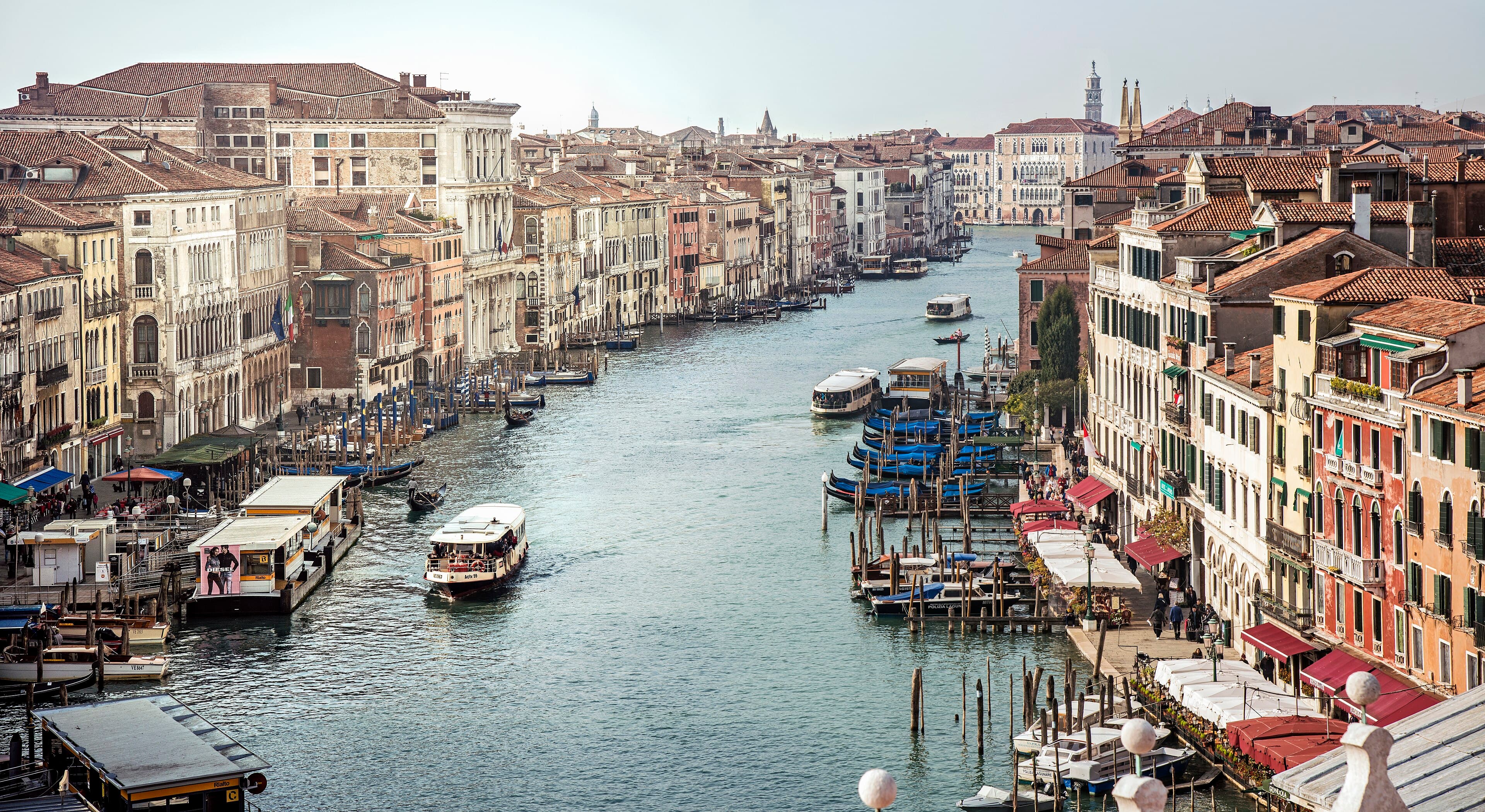
Venice, Italy
Things to Do in Venice Today: 6 Places With Stories You Won't Forget
A snail-shaped staircase, a bookshop that floods on purpose, an island with ten residents. Six real Venice stories, verified, that make the city impossible to walk past quickly.
Save My Day Editorial
July 23, 2026 · 4 min read
Photo: Didier Descouens, CC BY-SA 4.0
Venice doesn't really have streets — it has water, stone, and the gaps between them. Most visitors move fast, chasing the next landmark off a list. Slow down for an afternoon instead, and the city starts handing you its stranger stories: a staircase named after a snail, a library that floods on purpose, an island where ten people still live. Here are six places worth stopping for, and the facts that make them stick.
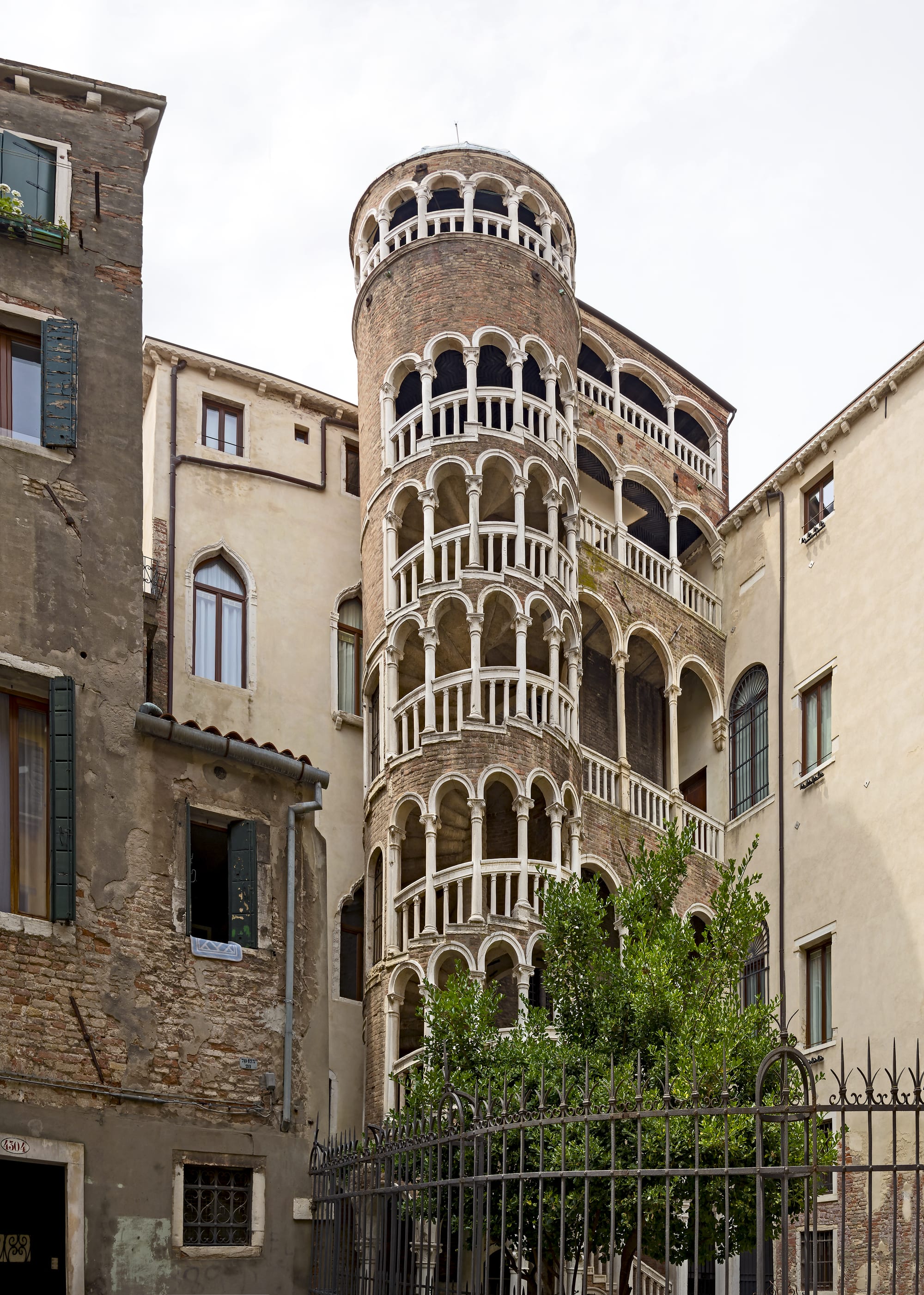
A staircase shaped like a snail
Tucked in a quiet courtyard off Campo Manin is the Scala Contarini del Bovolo, a spiral external staircase added to a 15th-century palazzo in 1499. "Bovolo" is Venetian dialect for snail, and one look at the coiling brick arches tells you why. It's easy to miss, has almost no line, and rewards you with one of the best rooftop views over the city's terracotta skyline. It also had a brush with Hollywood — Orson Welles used the palazzo as Brabantio's house in his 1952 film adaptation of Othello.
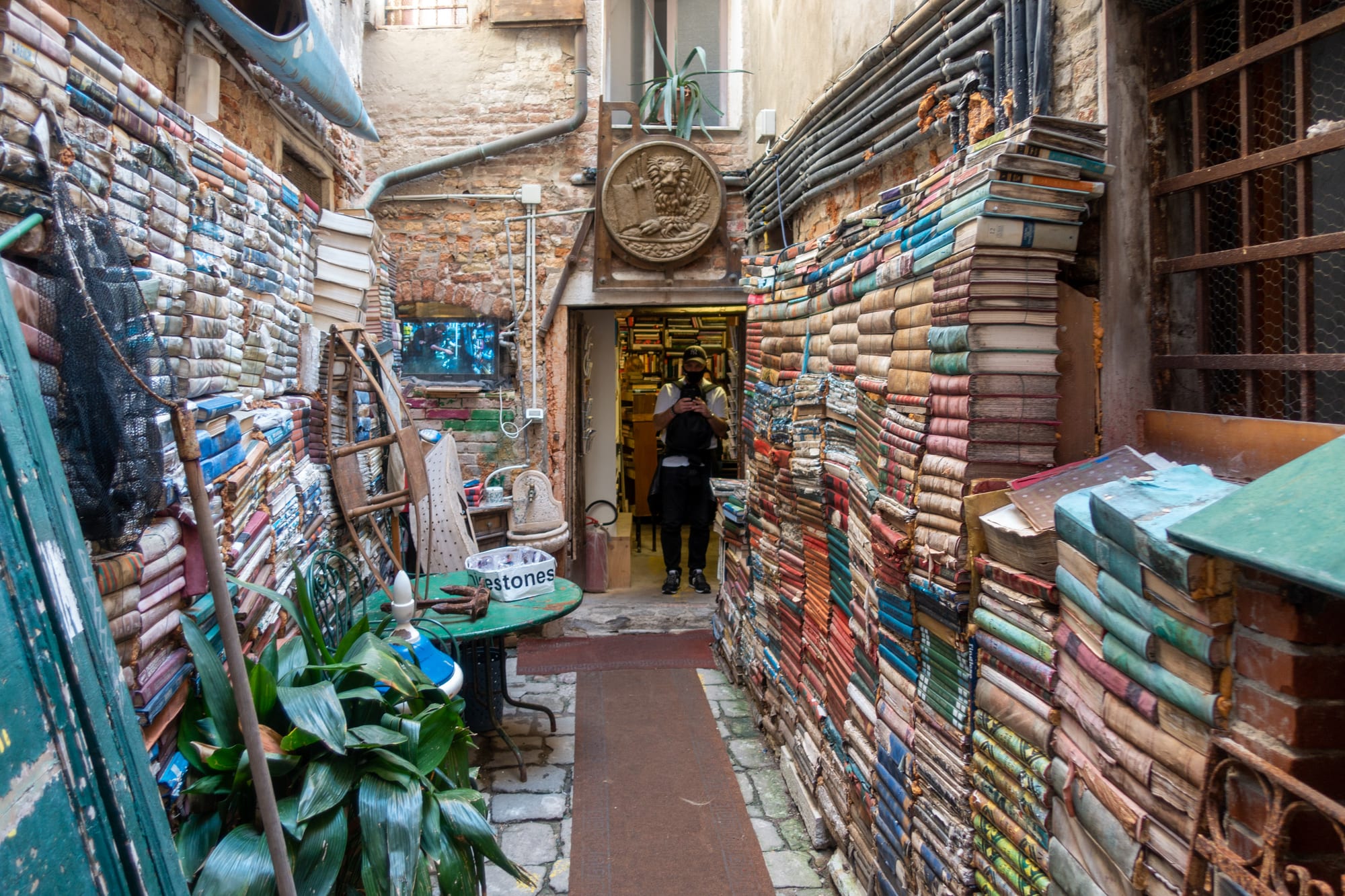
The bookshop that floods on purpose
Libreria Acqua Alta, near Santa Maria Formosa, stores its books in gondolas, bathtubs, and a full-size canoe — not for decoration, but because the shop floods regularly and its owner, Luigi Frizzo, built the whole layout around that fact when he opened it in 2002. Water-damaged books get stacked into a staircase in the back courtyard that has, quite literally, become a staircase made of books. Resident cats patrol the shelves. It calls itself the most beautiful bookshop in the world, and it's hard to argue once you're inside.
Under the gold
St. Mark's Basilica holds the relics of the evangelist Mark, but for centuries nobody in Venice could say exactly where they were — the story goes that they were hidden during renovations and quietly lost. They were rediscovered inside a pillar in 1094, an event Venetians considered a miracle and had mosaicked onto the church wall, where it still is. Nearly nine centuries later, on 24 June 1968, Venice returned a portion of the relics to the Coptic Church of Alexandria as a gesture of goodwill — reuniting them, after a long separation, with the rest of the saint.
An island of ten people
Take the vaporetto out to Torcello, the lagoon island that was Venice before Venice existed — settled in 452 AD, and the seat of a bishop for over a thousand years starting in 638. At its height it likely had a larger population than early Venice itself. Today it has a full-time population of around ten to twelve people. Ernest Hemingway spent time here in 1948, writing parts of Across the River and Into the Trees in what's now the island's one hotel. It is, almost impossibly, one of the quietest places in Europe within an hour of one of its busiest.
A bridge nobody thought would stand
The Rialto Bridge you see today — the single stone span crowded with shops — was finished in 1591 after three years of construction, designed by Antonio da Ponte. At the time, a rival architect named Vincenzo Scamozzi publicly predicted the design would collapse. It didn't. It's carried the weight of Venice's foot traffic for over 400 years and counting.
Glass, its own laws, and a monastery of books
Murano looks like a quieter, glassier cousin of Venice, but it once governed itself: the island had its own Grand Council and, for a time, minted its own coins — a level of independence unusual for a lagoon island so close to the seat of Venetian power. Its glassmaking reputation grew from a 1291 decree moving furnaces there for fire safety, and its monastery, San Michele di Murano, later became a genuine center of learning and printing in its own right.
Save My Day shows you exactly this kind of thing — matched to what time it is, what the weather's doing, and how you're feeling. Download the app and let it help you find days like this automatically.
Save My Day helps you discover what to do in your city today — matched to the weather, the time, and your mood.